Healthcare Operations in 2026: The Growing Role of Remote Teams in Revenue, Compliance, and Patient Experience
Healthcare organizations heading into 2026 face sustained staffing shortages, mounting revenue cycle complexity, and increasing regulatory scrutiny. While clinical roles remain difficult to fill, high turnover in administrative functions like patient access and billing is now a major risk to financial stability and patient experience. Many providers are turning to remote administrative teams and technology-enabled workflows to improve accuracy, reduce burnout, and support long-term operational resilience.
How Offshore Support Can Strengthen Endpoint Security
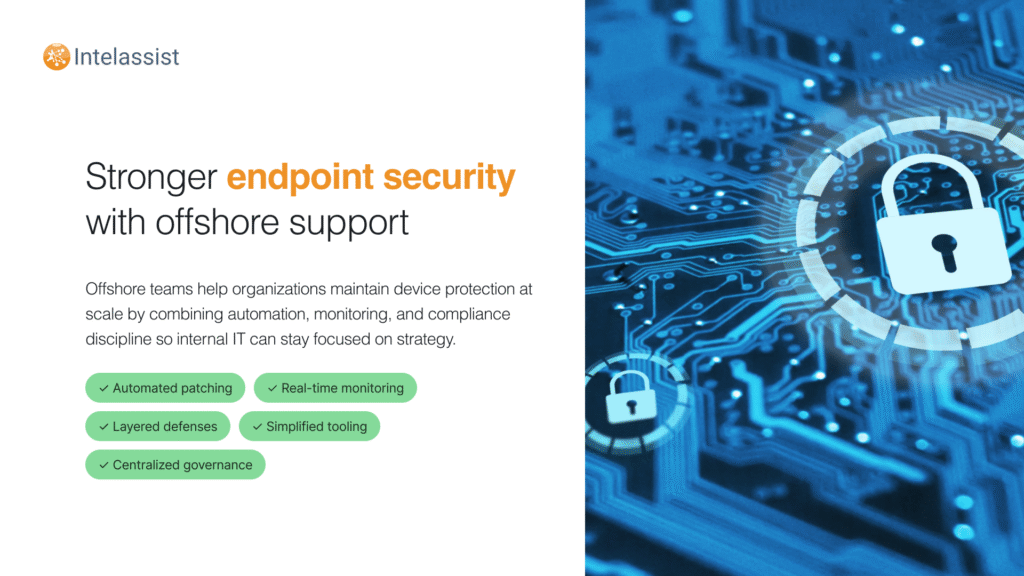
Offshore IT support can strengthen endpoint security by ensuring consistent patching, global monitoring, audit readiness, and reduced operational complexity—while freeing internal leaders to focus on strategy.
7 Ways Offshore Helpdesk Teams Enforce IT Policy Without Compromising Control
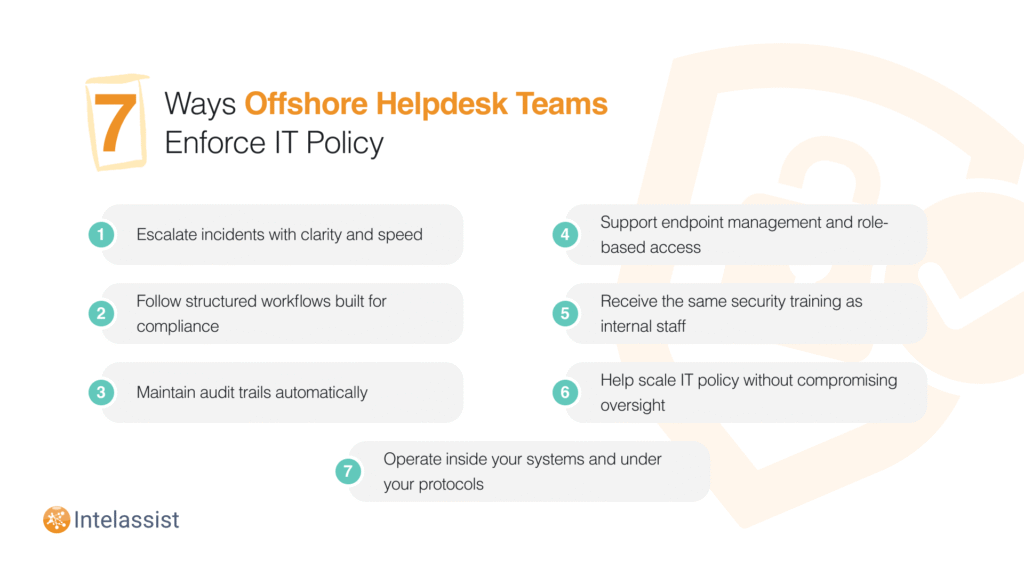
Offshore helpdesk teams can be key enforcers of IT policy when structured properly. From clear incident escalation and standardized workflows to maintaining audit trails and supporting endpoint security, global support teams help scale IT functions securely. With proper training and integration inside your systems, offshore teams uphold compliance without compromising control or visibility across borders and time zones.
Maintaining Security Standards Across Global Teams
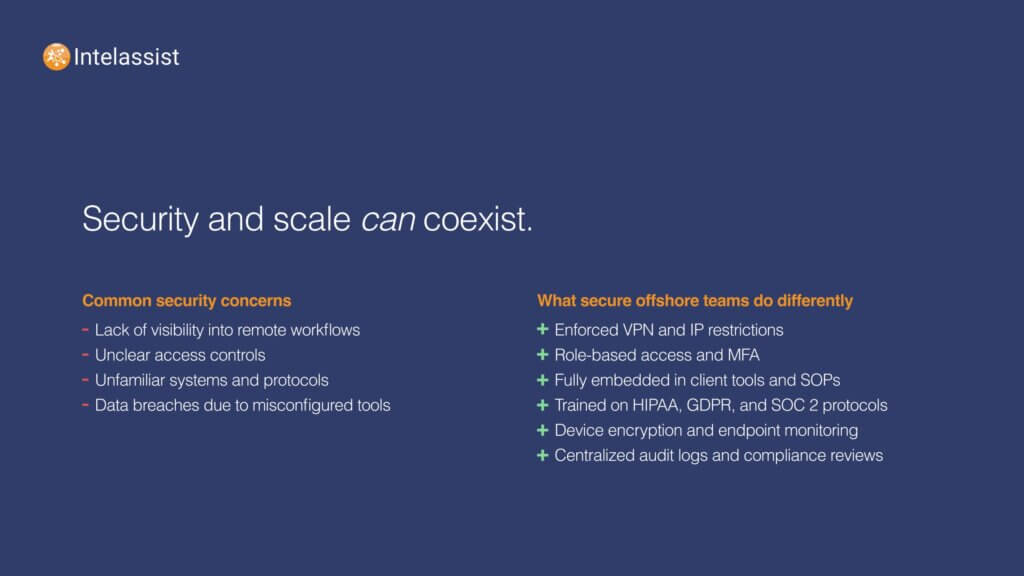
As organizations expand offshore staffing in finance, HR, and IT, maintaining data security is a top concern. By adopting Zero Trust models, enforcing strict authentication, providing thorough training, and implementing audit-ready controls, companies can safeguard sensitive information while leveraging global talent effectively. Distributed teams don’t mean compromised security — they can drive stronger, more transparent protection across the enterprise.