

Article

Navigating Current Trends and Future Trajectories: Philippines’ BPO Industry

In recent years, the Business Process Outsourcing (BPO) industry in the Philippines has emerged as a powerhouse, significantly impacting the nation’s economic landscape. In 2021, the sector contributed a substantial 7.5% to the total Gross Domestic Product (GDP), reflecting its vital role in driving economic growth. The latest data from the IT and Business Process Association of the Philippines (IBPAP) unveils a compelling narrative of consistent growth, despite the challenges posed by the pandemic and macroeconomic uncertainties.

From 2016 to 2022, the BPO industry exhibited commendable resilience, boasting a compounded annual growth rate of 5.1% in terms of revenue and 4.6% in headcount. This steadfast growth not only defied economic slumps but also had a tangible impact on the real estate market, particularly in the office segment. In 2022, BPO transactions accounted for a significant 65.2% of office leases in Metro Manila, underscoring the symbiotic relationship between the industry and the real estate sector.

However, the industry faces short to medium-term headwinds, marked by a recent policy shift allowing BPO companies registered with the Philippine Economic Zone Authority (PEZA) to transition to the Board of Investments (BOI). This strategic move enables companies to implement complete remote work without sacrificing fiscal incentives. Approximately half of PEZA’s 1,000 registered companies have made this transition, a decision that may have repercussions on the office market in the short term. Anticipated adjustments in office spaces and a potential decrease in demand may result from firms aligning their operations with new work paradigms.

Despite these challenges, the BPO sector is projected to remain a key player in driving office demand in the Philippines. IBPAP forecasts continued expansion, with leading BPO companies planning to either maintain or increase their office space by approximately 10.0% over the next three years. The rise of hybrid work models and a preference for flexible workspaces are expected to contribute to this ongoing trend, mitigating the impact of the structural shift witnessed in the industry.

Looking ahead, the BPO industry has ambitious growth plans for the next five years. With a target revenue of $59 billion and an envisioned workforce of 2.5 million, expansion strategies include enhancing business services, upskilling the workforce, improving the ease of doing business, and bolstering digital infrastructure. This forward-looking approach positions the BPO industry as a resilient and dynamic force, potentially solidifying its status as a backbone of the real estate market in the future.

In conclusion, while the BPO industry navigates current challenges, its ability to adapt, innovate, and set ambitious growth targets signals a trajectory that remains upward. The industry’s intricate interplay with the real estate sector reflects a symbiotic relationship that is likely to endure, contributing significantly to the economic narrative of the Philippines in the years to come.

Explore our blog

Dive deeper into related topics and expand your knowledge by exploring these handpicked articles from our blog. Click on any title below to learn more.

Blog Post

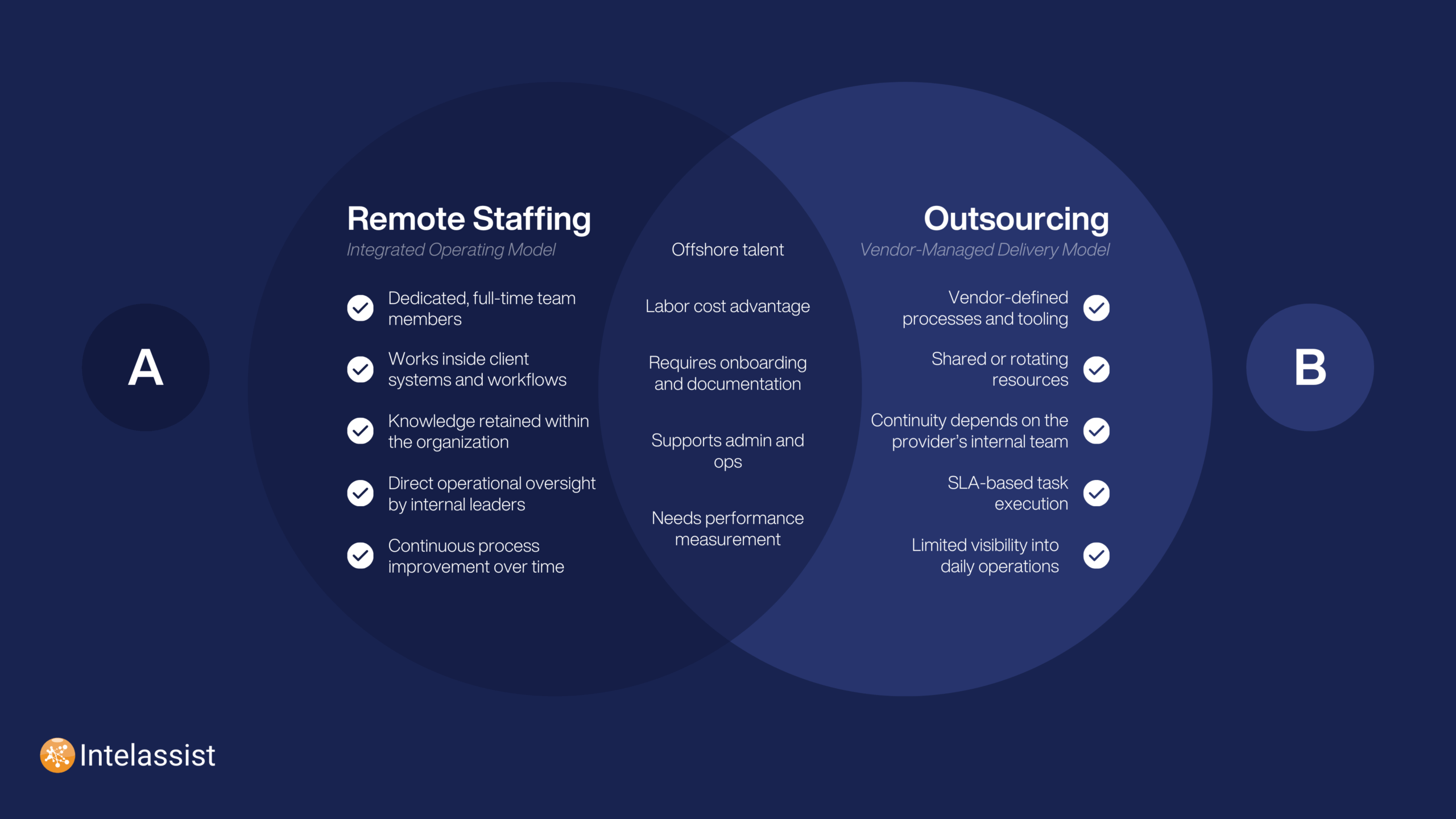
How Remote Staffing Differs from Outsourcing

Remote staffing and outsourcing are often treated as interchangeable, but they operate very differently in practice. This article breaks down how each model affects ownership, accountability, knowledge retention, and long-term performance, helping operational leaders choose the structure that best supports sustainable execution rather than short-term capacity relief.

Read More »
Blog Post

Construction, Engineering, and Architecture in 2026: Scaling Without Overhiring

Construction, engineering, and architecture firms are facing intense labor shortages, project volatility, and rising costs in 2026. With demand requiring hundreds of thousands of additional workers, many firms are shifting from traditional hiring to flexible workforce models. Remote specialists for estimating, documentation, and back-office operations help firms scale with project cycles, reduce bottlenecks, and improve bid accuracy without overstaffing. Hybrid staffing strategies that combine on-site teams with remote experts are emerging as the most effective way to protect margins, reduce burnout, and maintain project quality in a tight labor market.


Read More »
contact US

How can we help?

Get in touch with one of our local experts today. We typically respond within 24 hours.

Let's start a conversation!