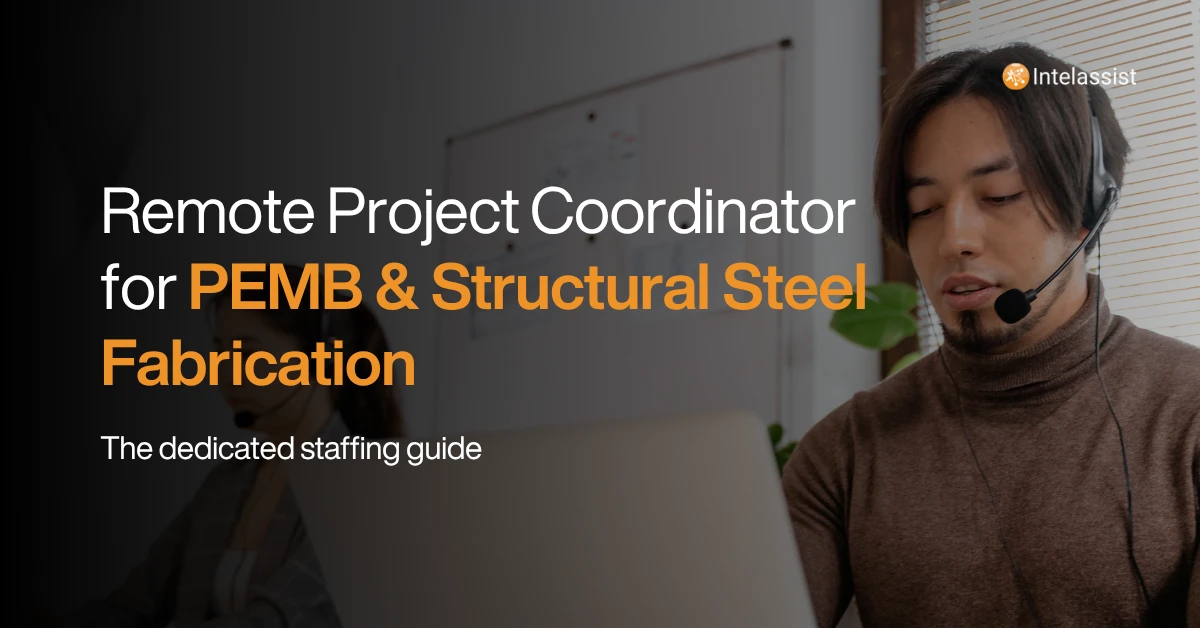
A remote project coordinator in PEMB (Pre-Engineered Metal Buildings) and structural steel fabrication is a dedicated technical team member who manages shop drawing submittals, RFI logs, detailing workflows, and cross-discipline communication between fabricators, steel detailers, and field erectors from a remote environment. Operating within your integrated in-house software, a remote project coordinator ensures shop production schedules stay on track without adding local headcount.
Unlike generalist virtual assistants, a dedicated construction project coordinator understands structural connection details, anchor bolt plans, bill of materials (BOM), and American Institute of Steel Construction (AISC) submittal protocols. They bridge the operational gap between engineering design sets and shop floor fabrication, maintaining oversight on active jobs.
Core Findings:
- The global metal fabrication market is projected to reach USD 426.7B by 2035, with construction accounting for 30.3% of end-use demand. This expansion creates severe capacity constraints for domestic detailing and administrative management.
- A projected 1.8% increase in U.S. steel consumption in 2026, driven by infrastructure spending, industrial projects, and residential construction, is accelerating submittal backlogs across structural steel shops.
- Delays in remote project management stem primarily from time zone misalignments and communication barriers; integrating dedicated offshore staff directly into daily project standups resolves these operational stalls.
- Cloud-based BIM platforms allow project teams to sync large-scale structural models in real time, allowing fabricators to hire dedicated remote staff from countries like the Philippines with certified engineering backgrounds at a predictable cost structure.
Why PEMB and Steel Fabrication Teams Need More Than a Generalist BPO
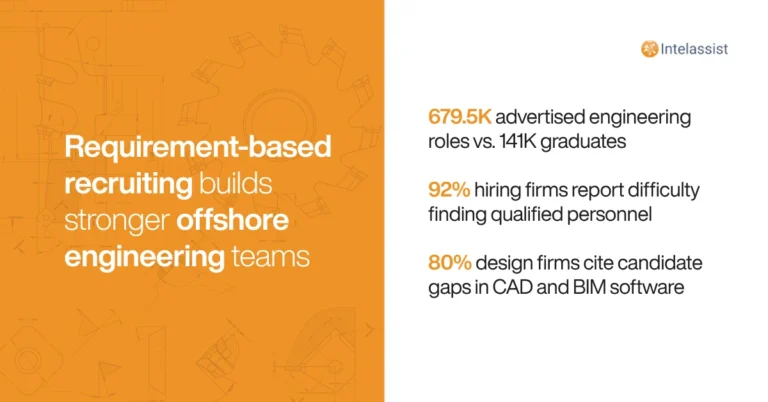
Many fabricators attempt to scale administrative and detailing support through generalist BPOs, only to experience severe operational friction. Understanding why traditional outsourcing fails in technical A/E/C environments is essential for building a resilient production pipeline. For a deeper breakdown of operational execution models, read what engineering services outsourcing actually looks like.
Lack of A/E/C Domain Expertise
Generalist BPOs and freelance platforms sell pooled, multi-tenant labor. When an operational leader needs a project coordinator for structural steel fabrication, generalist providers often supply workers who claim software proficiency but lack basic structural drafting conventions.
- Tool Unfamiliarity: Generalist workers rarely know how to navigate Autodesk Revit sheets or interpret civil and structural CAD drawings. When assigned to manage RFIs, they cannot spot missing dimensions or incorrect material callouts, forcing internal project managers to redo the work.
- High Turnover Overhead: Traditional BPOs experience average employee turnover rates of up to 40%. Every time an offshore worker leaves, the fabricator must restart the onboarding process, burning valuable engineering hours to train replacement talent.
Operational Friction in Fabricator Workflows
When remote coordinators lack technical context, minor miscommunications quickly snowball into costly project delays on the shop floor and in the field. This friction directly undermines project schedules, shop capacity, and client trust.
- Unresolved RFIs: In steel fabrication, an unaddressed RFI halts shop prep and field erection. When a generalist BPO mishandles submittal tracking, drawing revisions sit idle, leading to idle shop floor crews and jobsite delay claims.
- Management Strain: Operations leaders often turn to offshore staffing to relieve workload pressure. However, managing a transactional, black-box BPO increases supervisor oversight, creating more administrative drag than it saves.
How a Dedicated Construction Project Coordinator Streamlines Steel Fabrication Workflows
Integrating a dedicated remote project coordinator into your daily operations establishes consistent submittal tracking, technical quality checks, and real-time model alignment. Rather than managing task queues through a black-box vendor, your team gains a direct operational extension embedded in your software tools.
Submittal & RFI Lifecycle Management
A dedicated remote project coordinator takes full ownership of administrative and technical tracking throughout the detailing cycle. Working directly with your in-house platforms such as Autodesk Construction Cloud, they manage:
- RFI Tracking & Log Maintenance: Logging questions directly from detailers, routing them to the Engineer of Record (EOR), and chasing responses to prevent shop hold-ups.
- Drawing Queue Management: Tracking submittal schedules for anchor bolt plans, erection diagrams, and shop drawings to match fabrication shop sequencing.
Detailing & Connection Coordination for PEMB Systems
Pre-Engineered Metal Building (PEMB) projects require rigorous coordination across primary framing, secondary purlins/girts, metal wall panels, and field accessories. A specialized coordinator assists by:
- PEMB Submittal Verification: Reviewing shop drawing packages against manufacturer design criteria and architect sets before formal submittal.
- BOM Reconciliation: Cross-referencing structural bill of materials against purchasing and detailing releases to avoid field material shortages. This same level of technical precision is also critical in telecom and utility work, where teams need complete, compliant, permit-ready packages that reduce oversight demands and QA rework.
Real-Time Model Sync & Cloud BIM Collaboration
Rather than operating as an isolated vendor, a dedicated offshore team operates directly inside your software stack to maintain complete model integrity and communication transparency:
- Software Competency: Utilizing Autodesk Revit and AutoCAD for real-time model verification and clash tracking.
- Direct Daily Integration: Joining daily production syncs via Microsoft Teams or Slack to report on drawing status, hold lists, and shop release dates.
How to Hire Dedicated Remote Staff for Structural Steel Coordination
Building a high-performing remote team requires a deliberate hiring methodology focused on technical vetting, role alignment, and structured onboarding. Moving away from transactional outsourcing starts with establishing rigorous screening standards from day one.
Role-Specific Vetting & Practical Skills Testing
Hiring a successful remote project coordinator requires a technical screening before candidate interviews. Intelassist validates candidate capabilities through targeted evaluations:
- Software Verification: Candidates complete practical tests in Revit, AutoCAD, or Tekla to confirm they can navigate models, export PDF drawing sets, and pull structural data.
- Structural Terminology Audits: Testing knowledge of steel shapes (W-beams, HSS, angles), connection types, and submittal workflows.
- Communication Assessments: Ensuring clear written and spoken communication for daily collaboration with general contractors and EORs.
Day-1 Onboarding & Daily Operational Integration
Achieving long-term stability and high production output requires seamless integration into your existing operational framework:
- Direct Systems Access: Provide company email addresses, VPN or cloud access, and assign seats in your project management software.
- Clear SOPs: Define standard naming conventions, submittal folder structures, and RFI escalation procedures.
- Dedicated Retention Support: Intelassist maintains an industry-leading 90%+ employee retention rate by providing above-market compensation, local HR support, and continuous professional development.
Frequently Asked Questions (FAQ)
A dedicated remote project coordinator is a full-time, offshore professional who embeds directly into your operations to manage shop drawings, submittals, RFI logs, and BIM workflows using tools like Revit and AutoCAD.
Candidates undergo hands-on technical assessments before client interviews. They must navigate 3D models, review 2D CAD sets, and answer practical questions about structural steel detailing conventions.
Remote project coordinators work inside your cloud project management software (such as Procore or Autodesk Construction Cloud). They log RFIs, route them to engineers, track response deadlines, and alert shop superintendents to changes.
Coordinators work shifts aligned with your operating hours (EST, CST, MST, or PST) and communicate directly using your preferred internal channels, such as Microsoft Teams, Slack, or email.