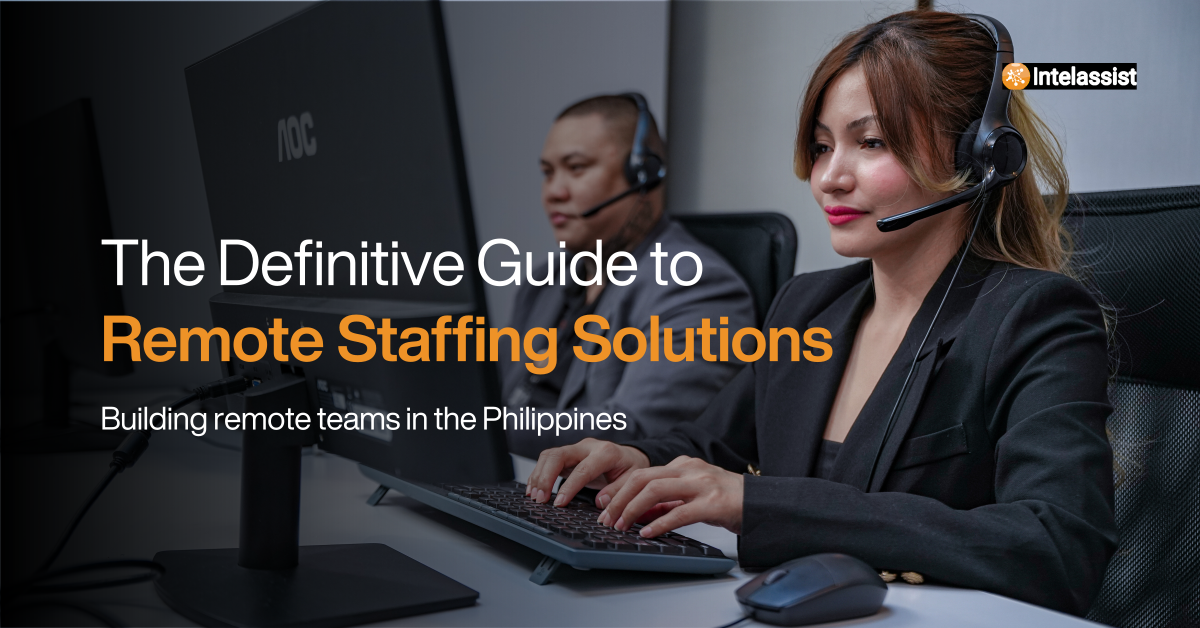
Everything you need to know about staffing solutions for remote teams
Staffing solutions have evolved well beyond temp agencies and job boards. For businesses facing rising labor costs, tight local talent markets, and persistent turnover, dedicated remote staffing has become a deliberate workforce strategy, not a last resort. This guide covers what staffing solutions are, how the dedicated remote model works, and what to look for in a provider.
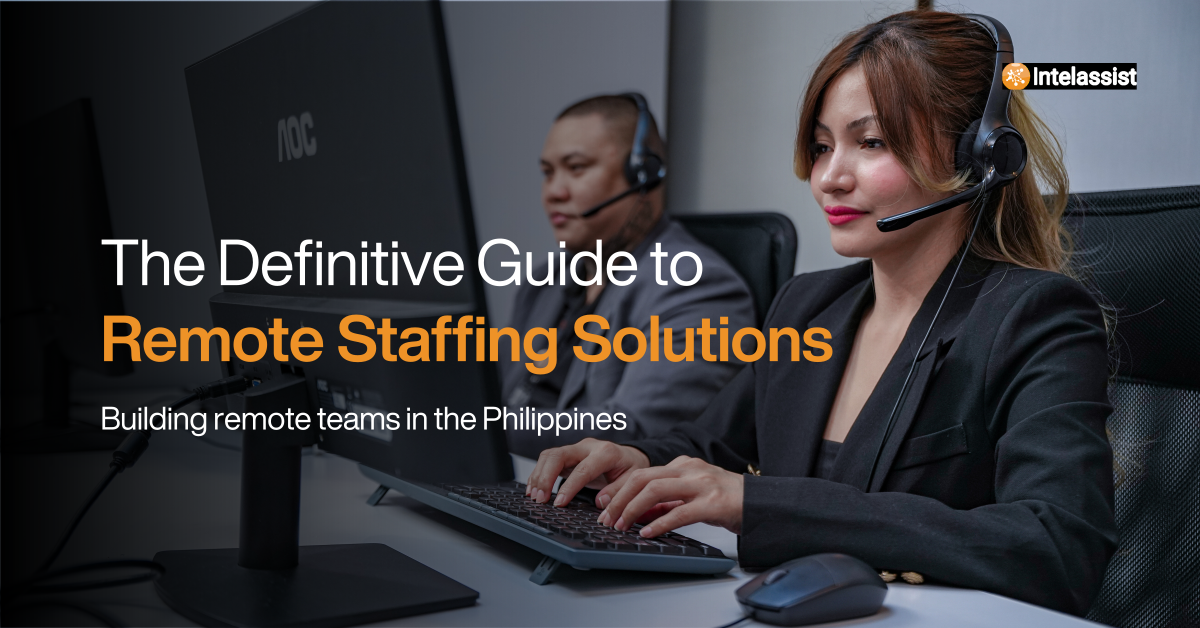
Key Takeaways
- Staffing solutions give businesses access to skilled professionals without the overhead of traditional hiring, and when structured correctly, they deliver measurable cost savings without sacrificing quality.
- Building remote teams in the Philippines is one of the most established and reliable approaches to remote staffing available to North American businesses today. The talent pool is deep, English proficiency is high, and the infrastructure is enterprise-grade.
- Dedicated remote staffing (where professionals work exclusively for one organization) consistently outperforms shared resource models on retention, integration, and long-term performance.
- Effective customer support, technical production work, and back-office functions can all be staffed remotely when the model is built around accountability and direct client oversight.
- Selecting the right remote staffing provider matters more than selecting the right candidate. The structure behind the placement determines the outcome.
What Are Staffing Solutions?
Staffing solutions are services that connect businesses with skilled professionals, especially beneficial for companies struggling to find talent or experiencing high employee turnover. By leveraging staffing services, you can tap into a broader talent pool, alleviating the challenges of limited access to skilled workers. For some companies, it means a temp agency filling a seat for three months. For others, it means a dedicated remote professional in Manila who has worked exclusively for their firm for five years, knows their systems inside out, and is as embedded in daily operations as anyone on the payroll.
When Staffing Solutions Make the Most Sense
Staffing solutions are especially valuable for organizations dealing with:
- Difficulty finding qualified local candidates at a sustainable rate
- High turnover that disrupts operations and erodes institutional knowledge
- Rising labor costs that make domestic hiring increasingly difficult to justify
- Capacity gaps that slow growth without a clear path to filling them locally
The right staffing solution expands your talent pool, reduces time-to-hire, and puts the right person in the role without the overhead of a full domestic recruitment process. Additionally, staffing solutions help address the common pain points of inefficient processes and high staffing costs, allowing you to focus on core business functions while maintaining productivity and efficiency.
Many companies are turning to staffing solutions as a smart strategy to optimize their workforce. This approach not only enhances operational efficiency but also contributes to higher employee satisfaction and retention For more information about what specializations can benefit from staffing solutions, check out Intelassist’s Solutions page.
Remote Staffing Provides Cost-Effective Solutions
Remote staffing is one of the most effective ways to reduce the overhead costs that come with traditional on-site hiring. For most businesses, the savings include:
- Office space and utilities
- Equipment and IT infrastructure
- Benefits, payroll taxes, and HR compliance
- Recruitment and onboarding cycles
Access to a Deeper Talent Pool
By building remote teams in the Philippines, businesses gain access to a deep pool of skilled professionals at 50 to 70 percent less than equivalent US hiring costs. According to IBPAP, the Philippines IT-BPM sector employs 1.9 million workers and is projected to grow to 2.5 million by 2028, reflecting a workforce that is expanding in both size and specialization. English is an official language and the medium of instruction throughout higher education. As a result, cultural alignment with North American business norms reduces onboarding friction from day one.
Scalability Without Overhead
In addition to cost savings, remote staffing provides flexibility that traditional hiring simply can’t match. You can scale up or down as business needs change without the fixed overhead that comes with expanding a domestic headcount. Moreover, this adaptability allows businesses to respond to market demand without the delays typically associated with local recruitment cycles.
The result is a staffing model that maintains operational efficiency without compromising on quality.
Enhancing Operational Efficiency With Dedicated Teams
Dedicated remote teams improve operational efficiency by removing production work from people who shouldn’t be doing it. When a senior engineer spends half their day on drafting work, or a practice administrator handles prior authorization follow-ups all afternoon, the business is paying senior-level rates for production-level output. Consequently, a dedicated remote professional absorbs that work, freeing senior staff for the decisions and relationships only they can handle.
The Compounding Effect of Institutional Knowledge
The efficiency gains compound over time because:
- A dedicated team member builds institutional knowledge specific to your business
- They learn your systems, standards, and edge cases over months and years
- They flag problems before they escalate rather than waiting for direction
- Furthermore, they onboard new processes faster than a new hire would
Retention as an Efficiency Driver
Beyond productivity, high retention directly reduces operational disruption. According to Deloitte’s 2024 Global Outsourcing Survey, 80% of executives plan to maintain or increase investment in third-party staffing, in part because the cost of turnover and re-onboarding has become impossible to ignore.
Accessing Skilled Professionals Through Outsourcing
Outsourcing allows you to tap into a vast pool of skills and expertise that may not be available in your local market. By leveraging this approach, you can enhance your team’s capabilities without the hassle of extensive training or recruitment processes.
The Philippines stands out as a premier destination for outsourcing, thanks to its highly skilled workforce and competitive cost advantages. Filipinos are known for their strong English language skills, cultural compatibility, and dedication to quality work. Many businesses have successfully utilized this talent pool to fill roles in areas like customer support, IT, finance, and back-office operations.
By outsourcing non-core functions, you can focus on your primary business activities. This strategic shift not only streamlines your operations but also drives efficiency and productivity. For example, if your business needs dedicated customer care support, outsourcing allows your in-house team to concentrate on core objectives while skilled professionals manage customer inquiries.
Consider these benefits when exploring outsourcing solutions:
- Access to specialized skills
- Cost-effective staffing options
- Increased focus on core business functions
Outsourcing to the Philippines can transform your business by providing the skilled professionals you need while enabling you to maintain a focus on growth and innovation.
Improving Customer Support with Remote Staffing
Remote staffing solutions significantly enhance your customer support capabilities by offering 24/7 service availability. This round-the-clock support allows you to address customer inquiries and issues at any hour, ensuring that your clients always receive timely assistance. With a dedicated remote team, you can maintain high levels of service and customer engagement.
Access to multilingual support staff is another advantage of remote staffing. This feature enables you to cater to a diverse, global customer base, breaking down language barriers that often hinder effective communication. Multilingual representatives can connect with customers in their preferred language, fostering better relationships and trust.
Moreover, remote staffing improves customer satisfaction by reducing wait times and increasing service quality. With dedicated teams focusing solely on customer care, you can streamline processes and enhance the overall customer experience. When customers receive prompt and effective support, their loyalty grows, ultimately driving revenue for your business.
Incorporating these strategies can lead to substantial improvements in your customer support operations. Consider exploring remote staffing solutions for your organization to achieve these benefits. For more information on how it works, you can check out Intelassist’s recruitment process here.
Staffing Solutions for High Productivity and Cost Savings
Choosing the right staffing solutions can significantly enhance productivity while reducing costs. By leveraging remote teams in the Philippines, businesses gain a strategic advantage in accessing a diverse talent pool that can drive operational efficiency. These dedicated teams not only help manage expenses but also streamline processes, allowing you to focus on core business functions. This dual benefit leads to improved revenue generation and heightened customer satisfaction, creating a win-win scenario for your organization.
Implementing effective staffing solutions isn’t just about cutting costs; it’s about making a smart investment in your workforce. With the Philippines being a hub for skilled professionals, companies can tap into expertise that elevates their service delivery and operational capabilities. By integrating remote staffing into your business model, you position yourself to tackle high turnover rates and inefficiencies, ultimately fostering a culture of productivity that contributes to long-term success.
Start exploring your options today by researching the best remote staffing solutions platforms for your needs. This initial step can set the foundation for a robust, cost-effective staffing strategy that meets your business goals.
| Feature | Remote Staffing | Traditional Staffing |
|---|---|---|
| Cost | Lower overhead costs | Higher operational costs |
| Talent Access | Global talent pool | Local talent limitations |
| Flexibility | Scalable teams | Fixed workforce size |
| Efficiency | Streamlined processes | Potential inefficiencies |
| Support Availability | 24/7 service | Limited hours |
| Language Skills | Multilingual support | Typically monolingual |
| Employee Turnover | Lower turnover rates | Higher turnover rates |
Frequently Asked Questions
A staffing solution is a service that connects businesses with skilled professionals to fill specific roles, either on a temporary, contract, or long-term dedicated basis. Staffing solutions range from traditional temp agencies that fill seats quickly to dedicated remote staffing models where professionals work exclusively for one organization over an extended period. The type of staffing solution a business chooses determines the quality, consistency, and cost profile of the outcome.
The most common models are temporary staffing for short-term or project-based needs, contract staffing for fixed-term engagements with defined scope, direct placement where the candidate transfers to the client’s payroll after a search fee, and dedicated remote staffing where professionals work exclusively for one business and are managed for long-term retention. Each model carries a different cost structure, risk profile, and performance outcome. For ongoing operational roles, dedicated remote staffing consistently delivers the strongest long-term value.
Both countries have large, English-speaking workforces and well-established remote staffing industries. The primary differences come down to cultural alignment, role specialization, and attrition. Filipino professionals are generally noted for stronger affinity with North American business norms and communication styles, and the Philippines has deeper talent concentrations in healthcare administration, AEC production support, accounting, and customer care. India has historically been stronger in large-scale software development and IT operations. For roles in healthcare, AEC, finance, and customer care, the Philippines is typically the stronger fit for North American businesses.